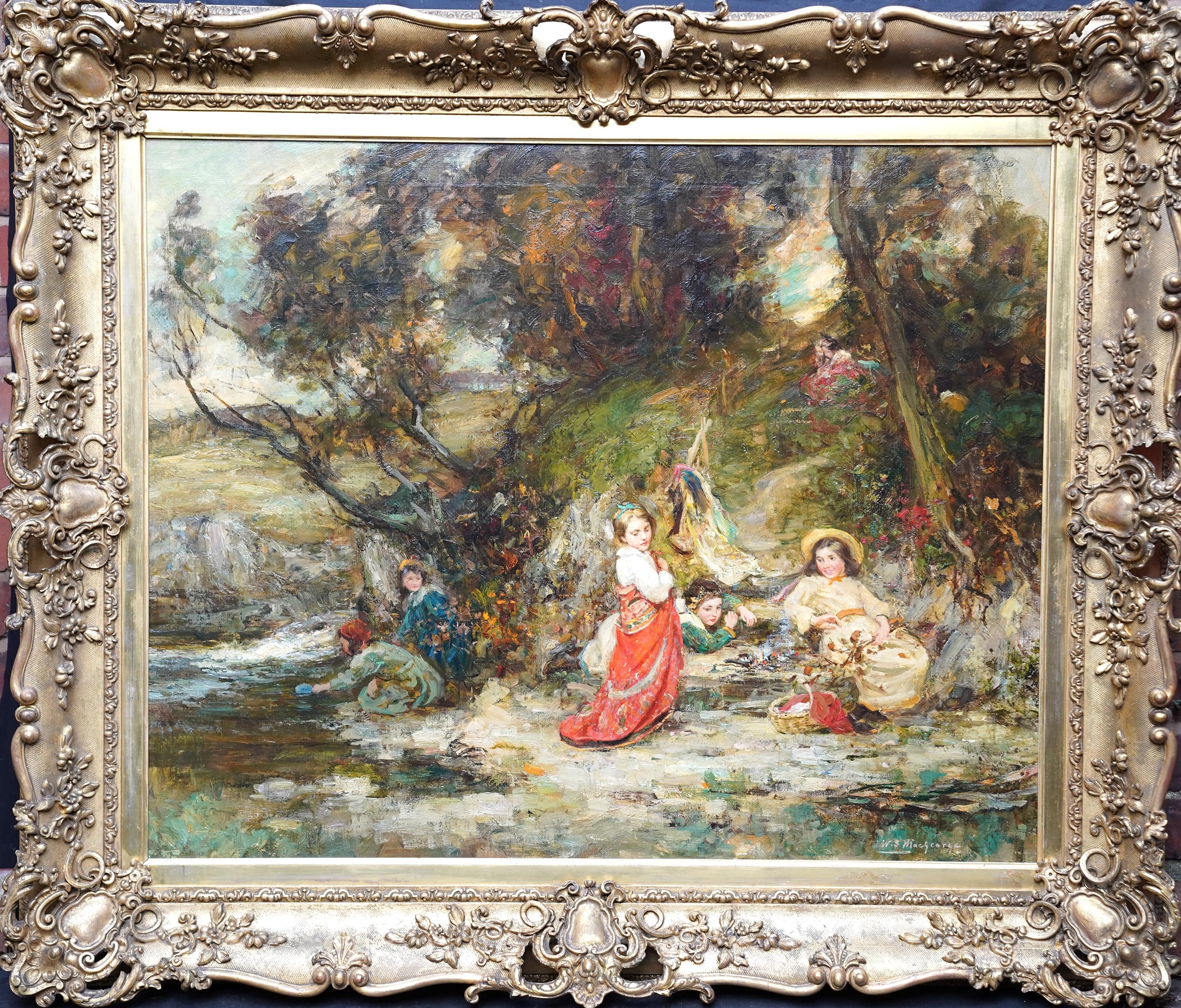
William Stewart MacGeorge (1861-1931)
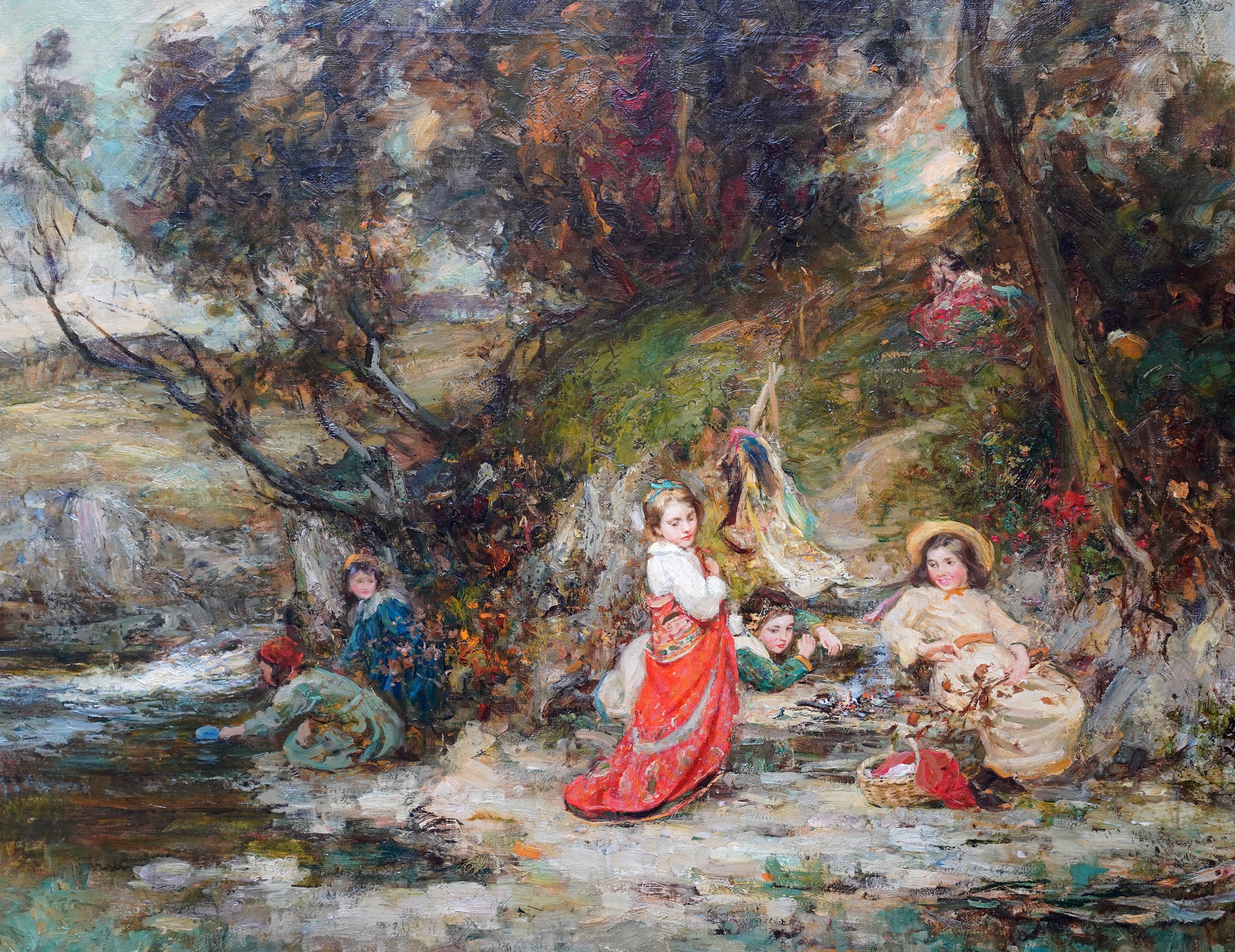
| Artist Name | William Stewart MacGeorge (1861-1931) |
|---|---|
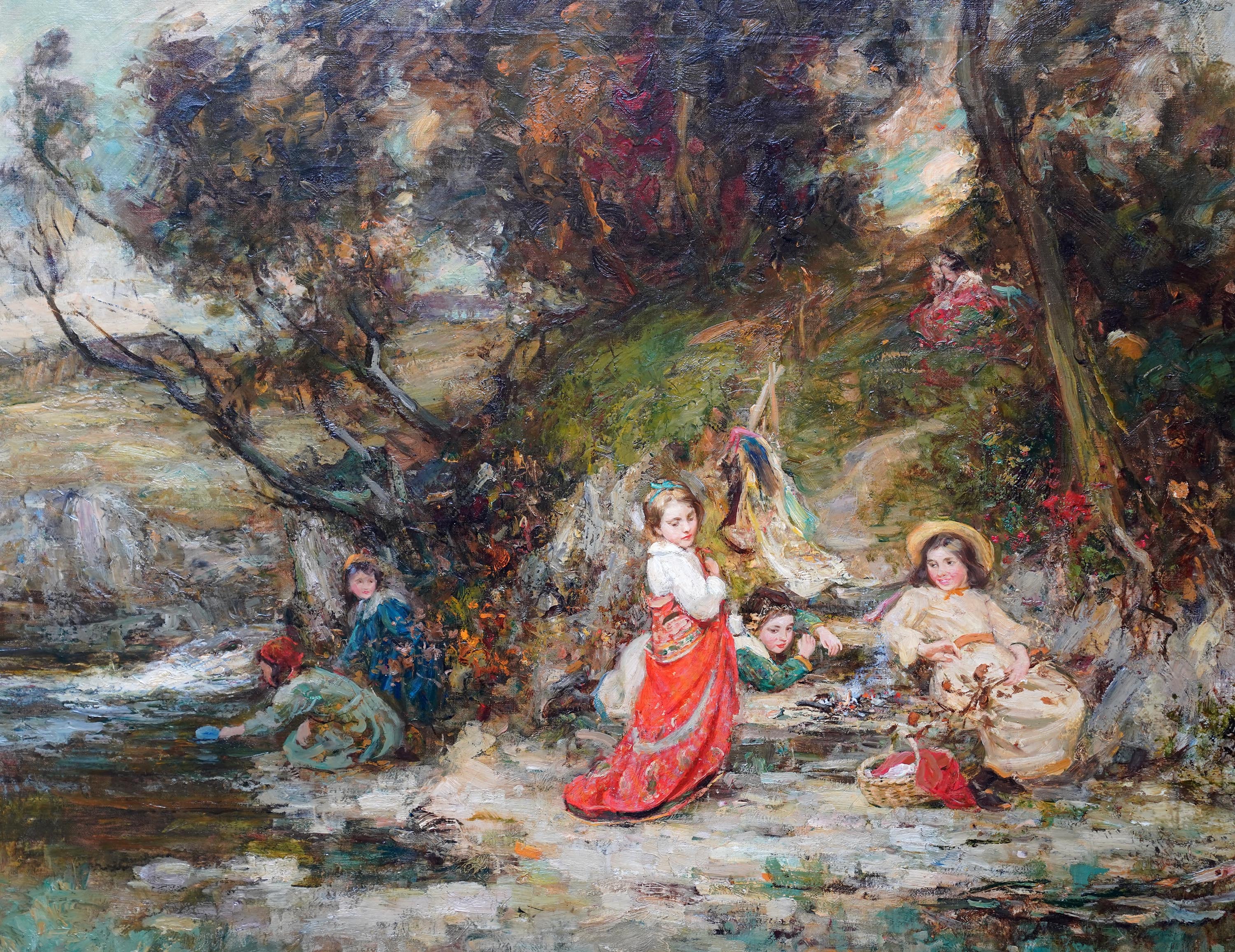
| Title | My Lady's Train |
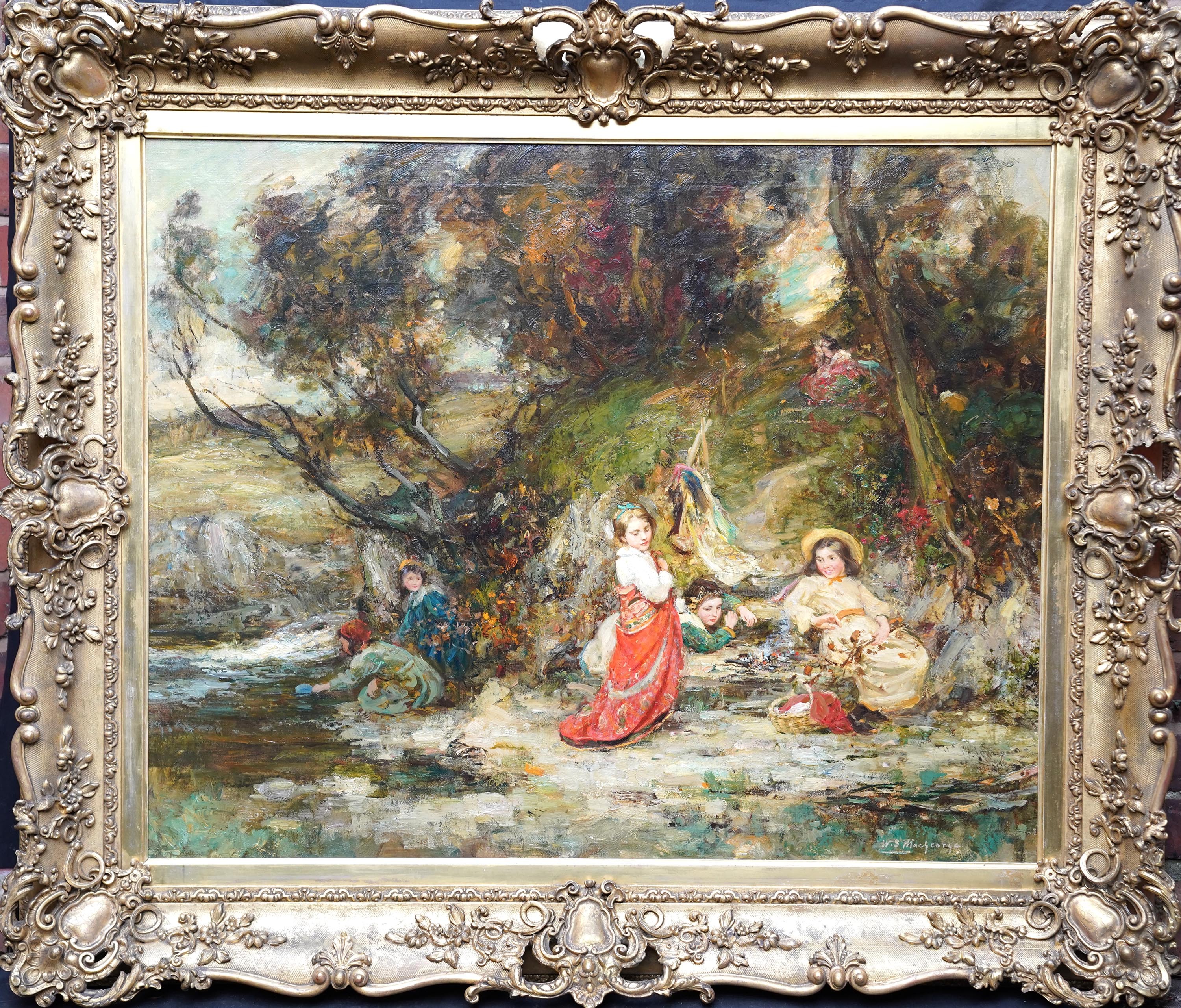
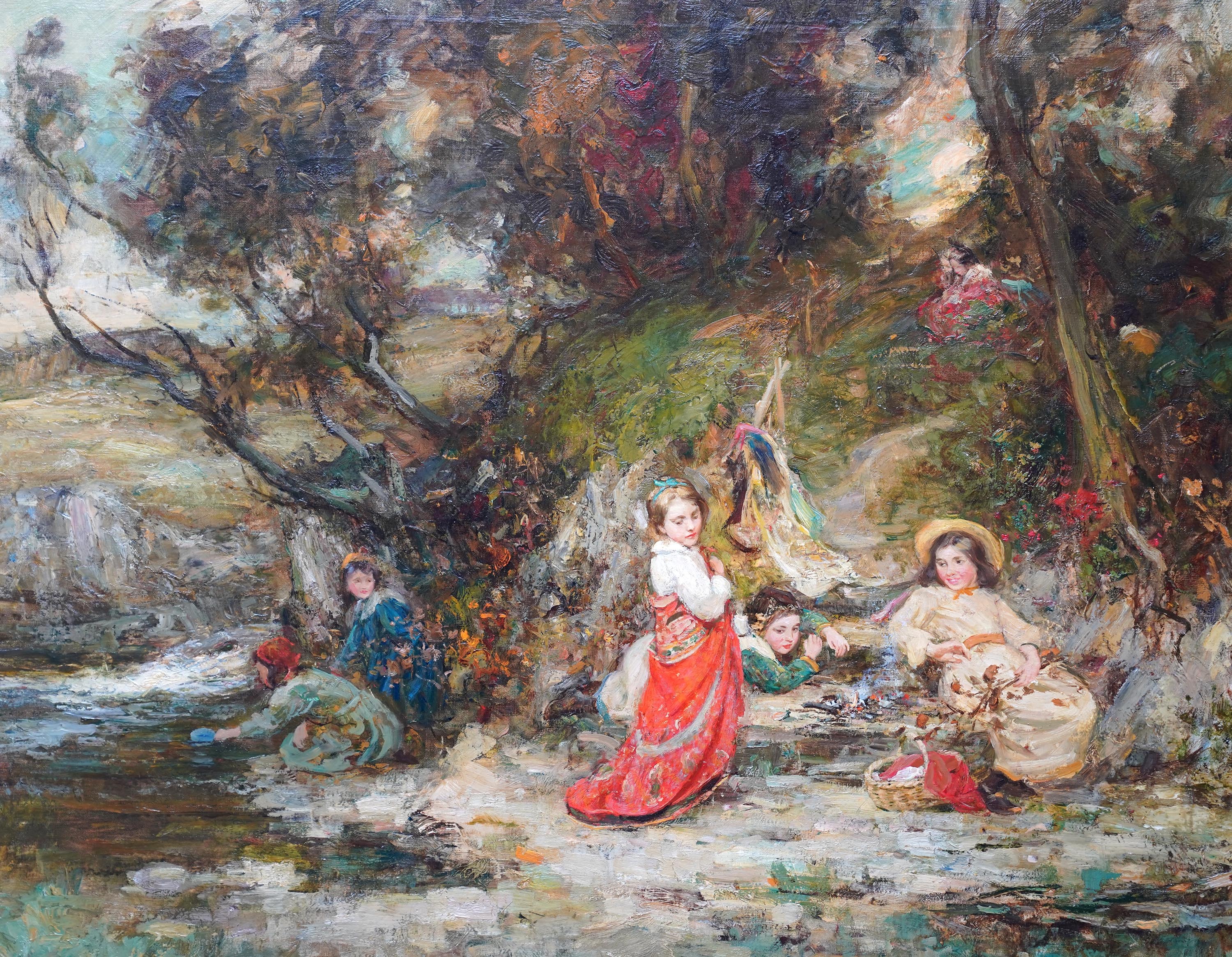
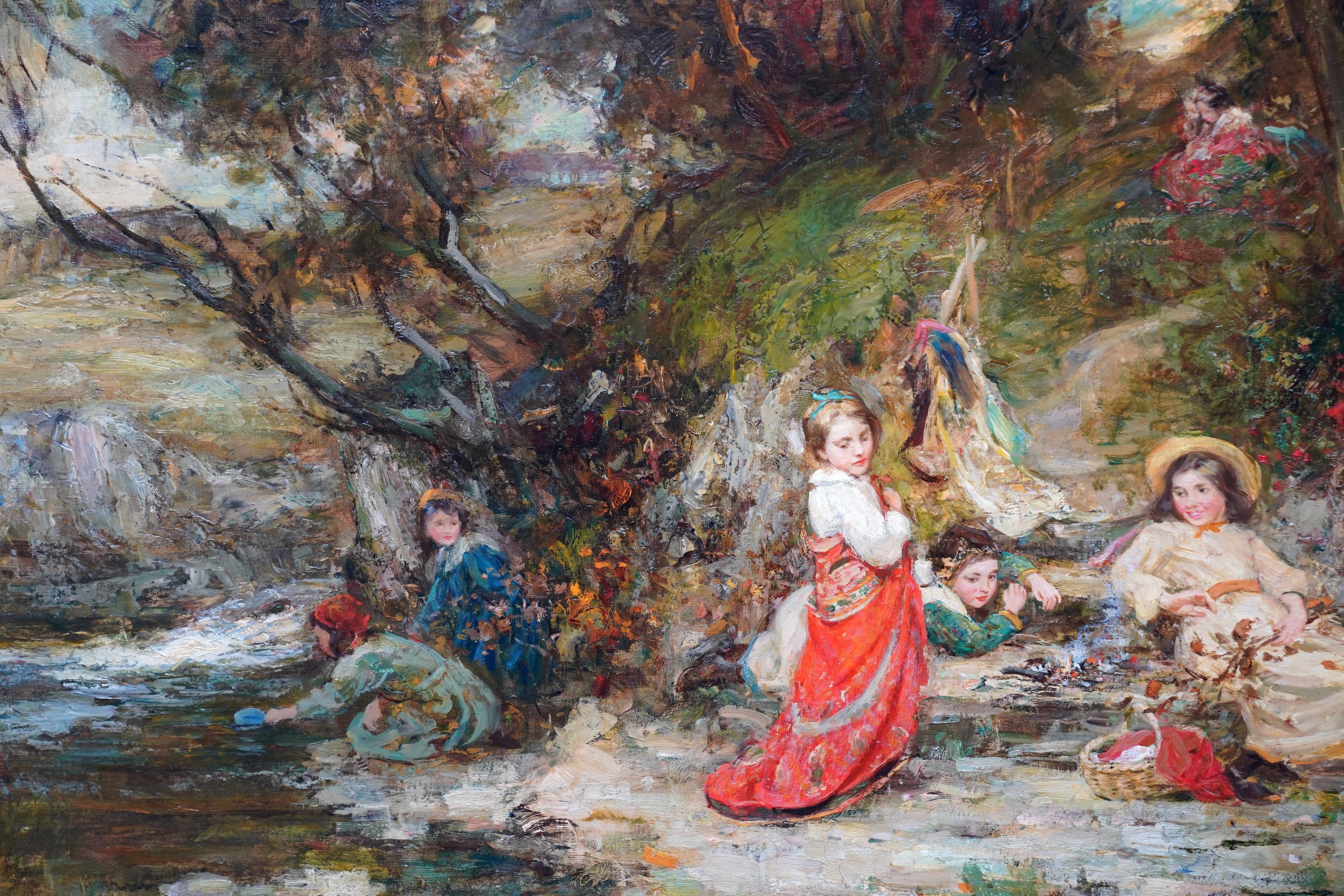
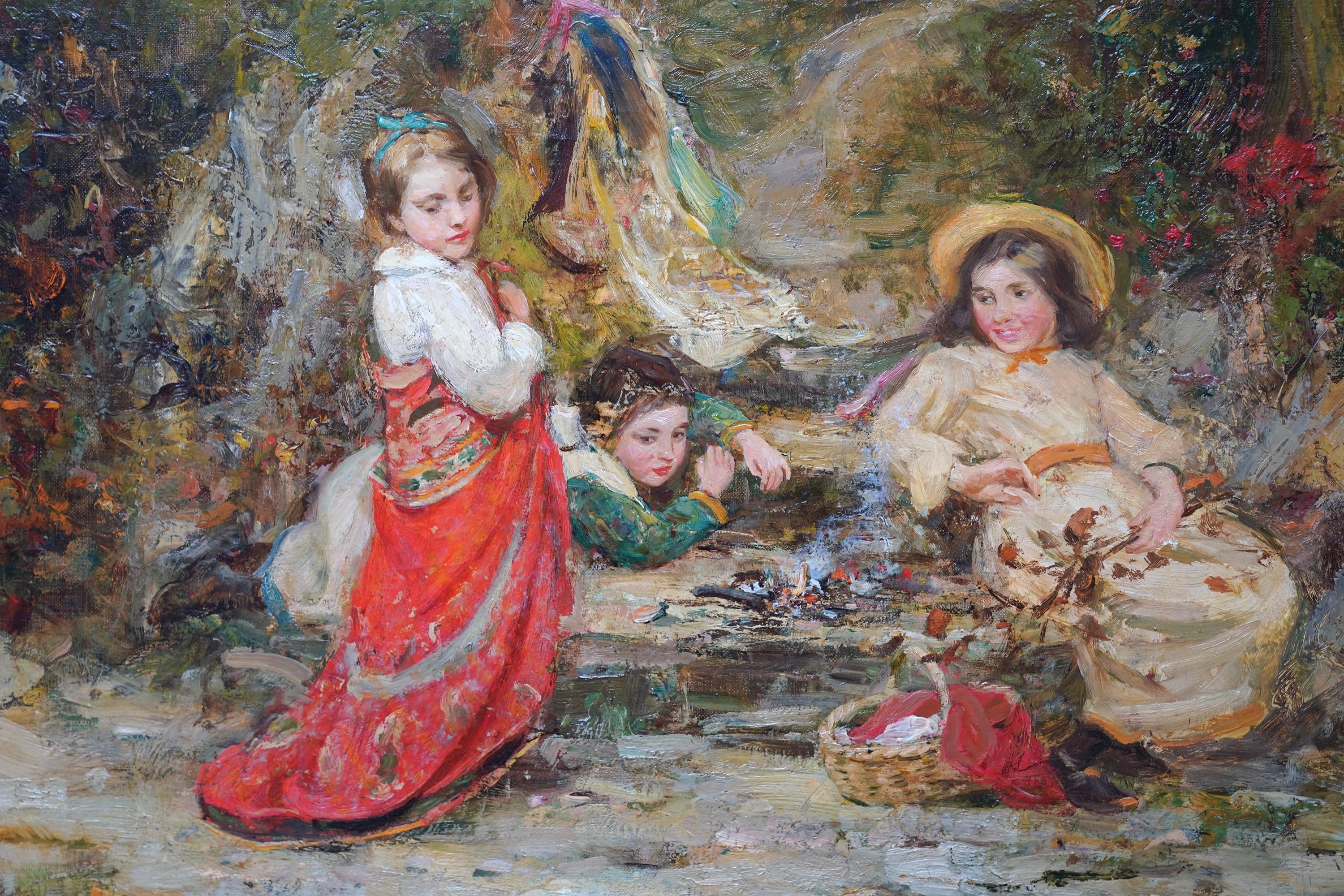
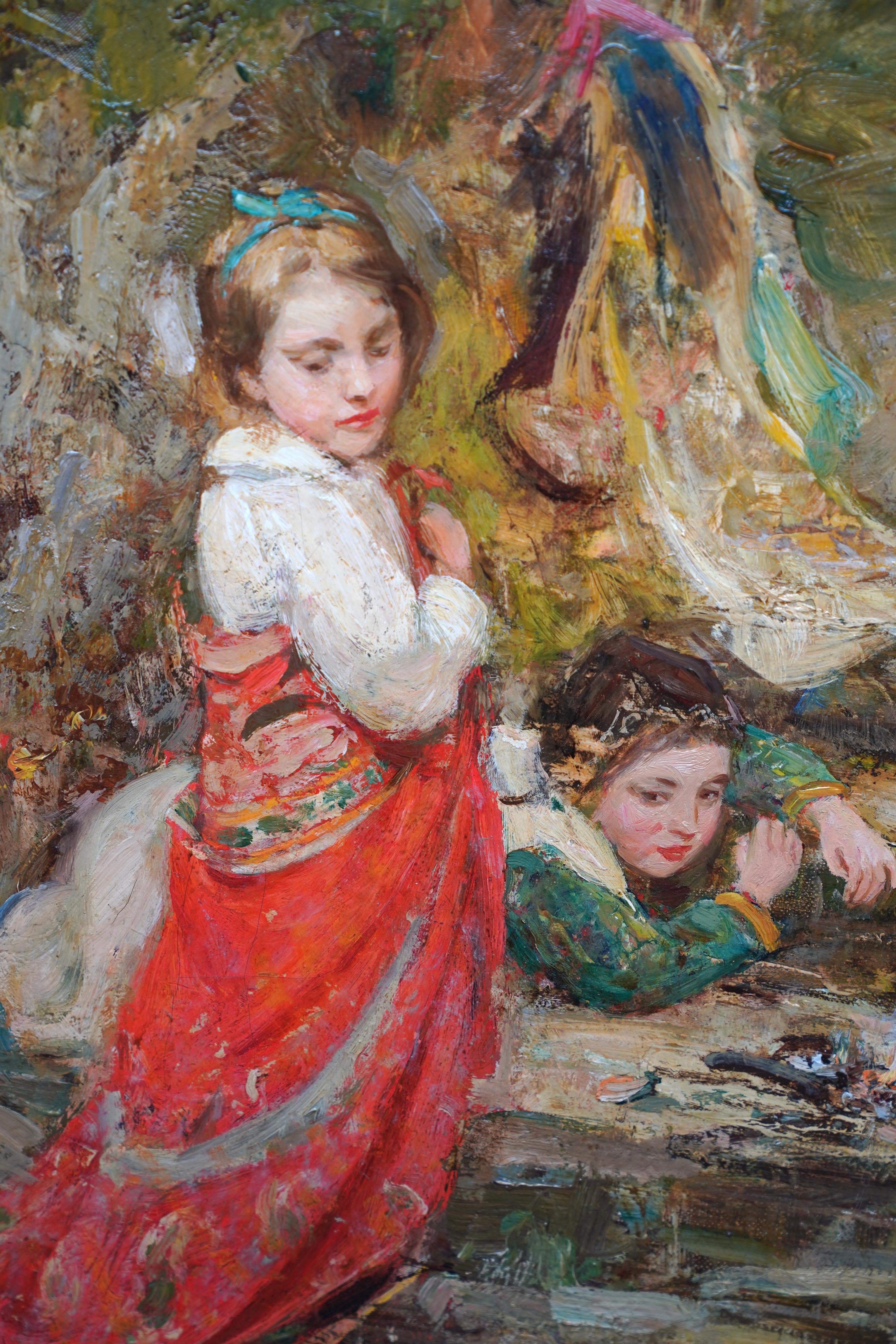
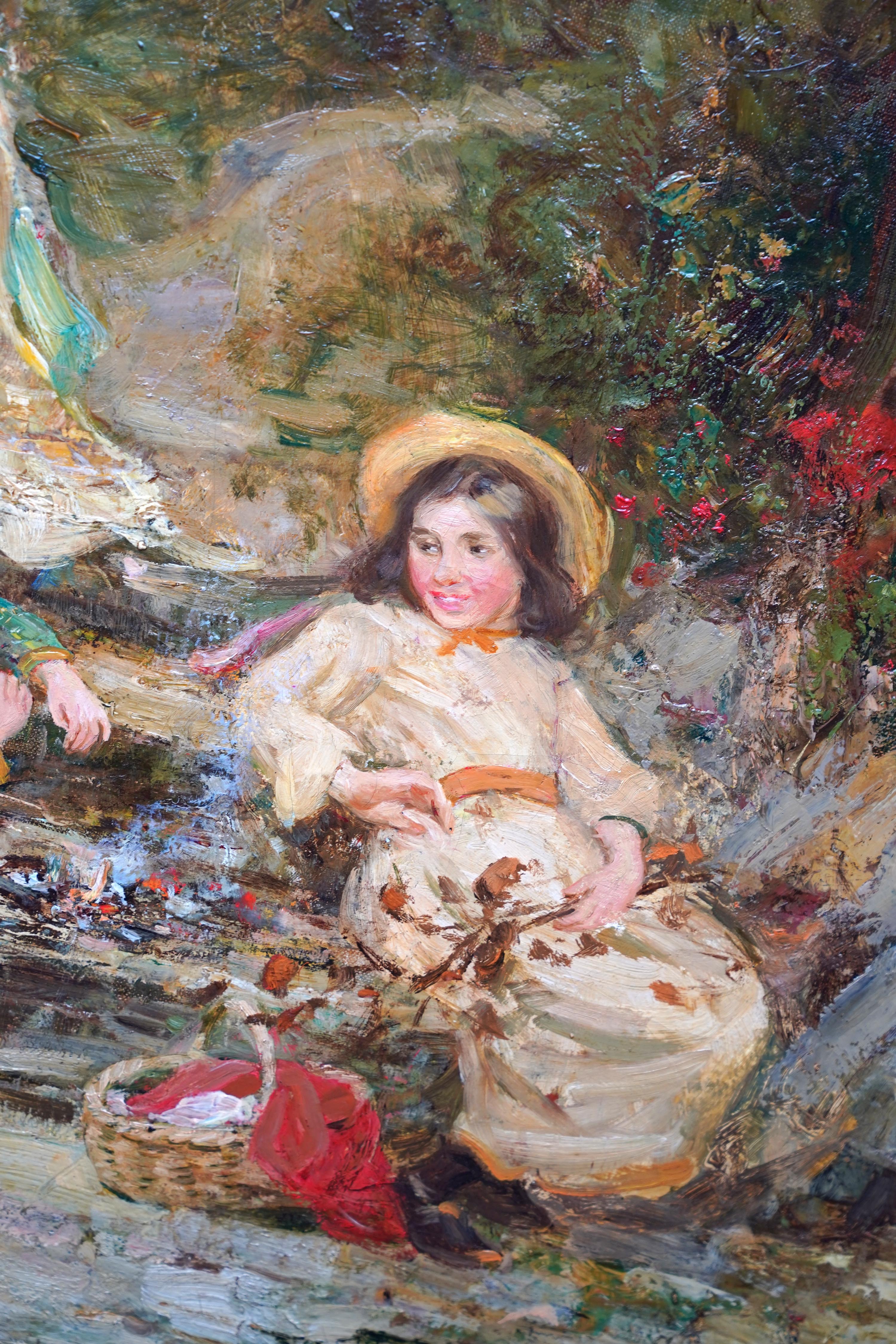
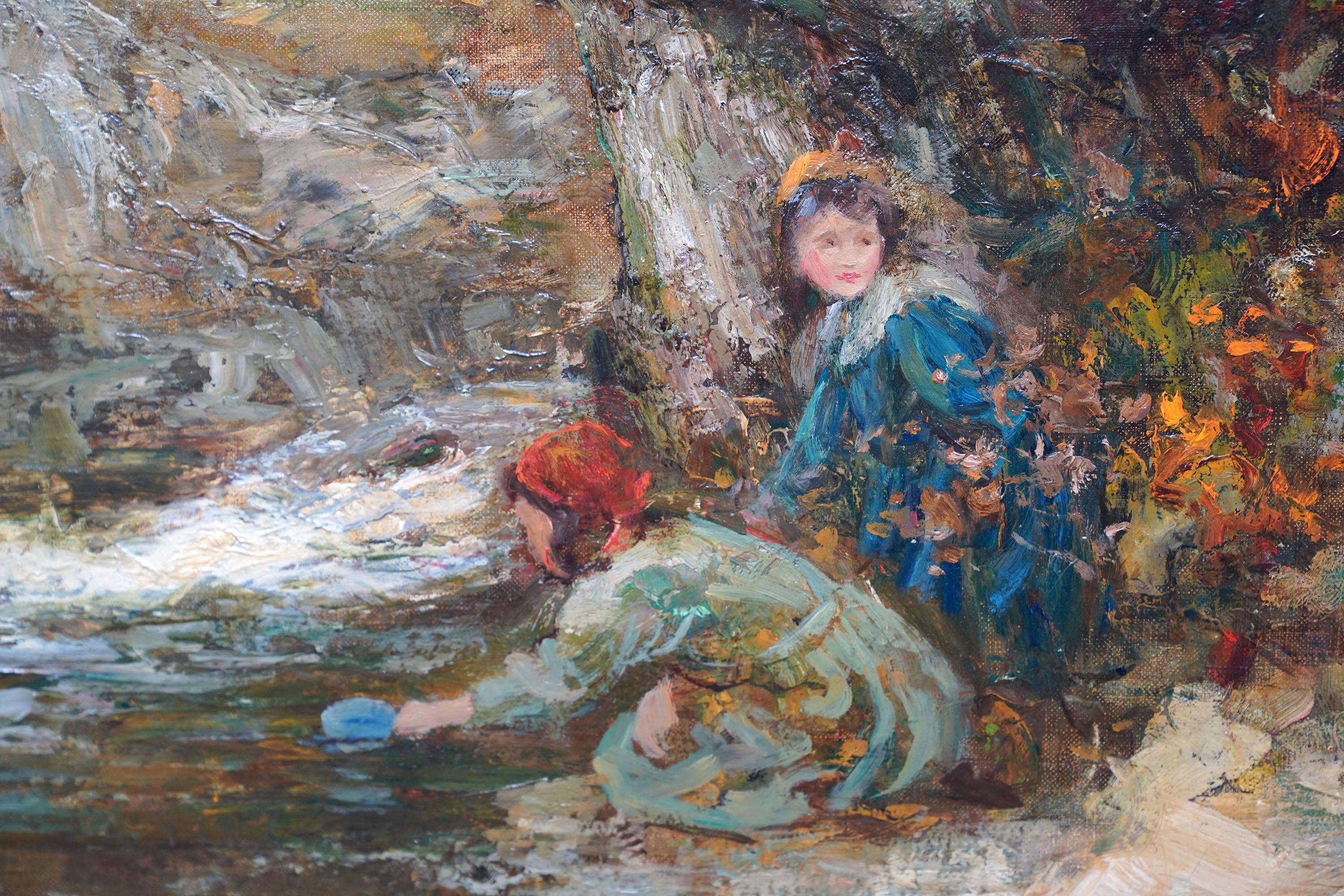
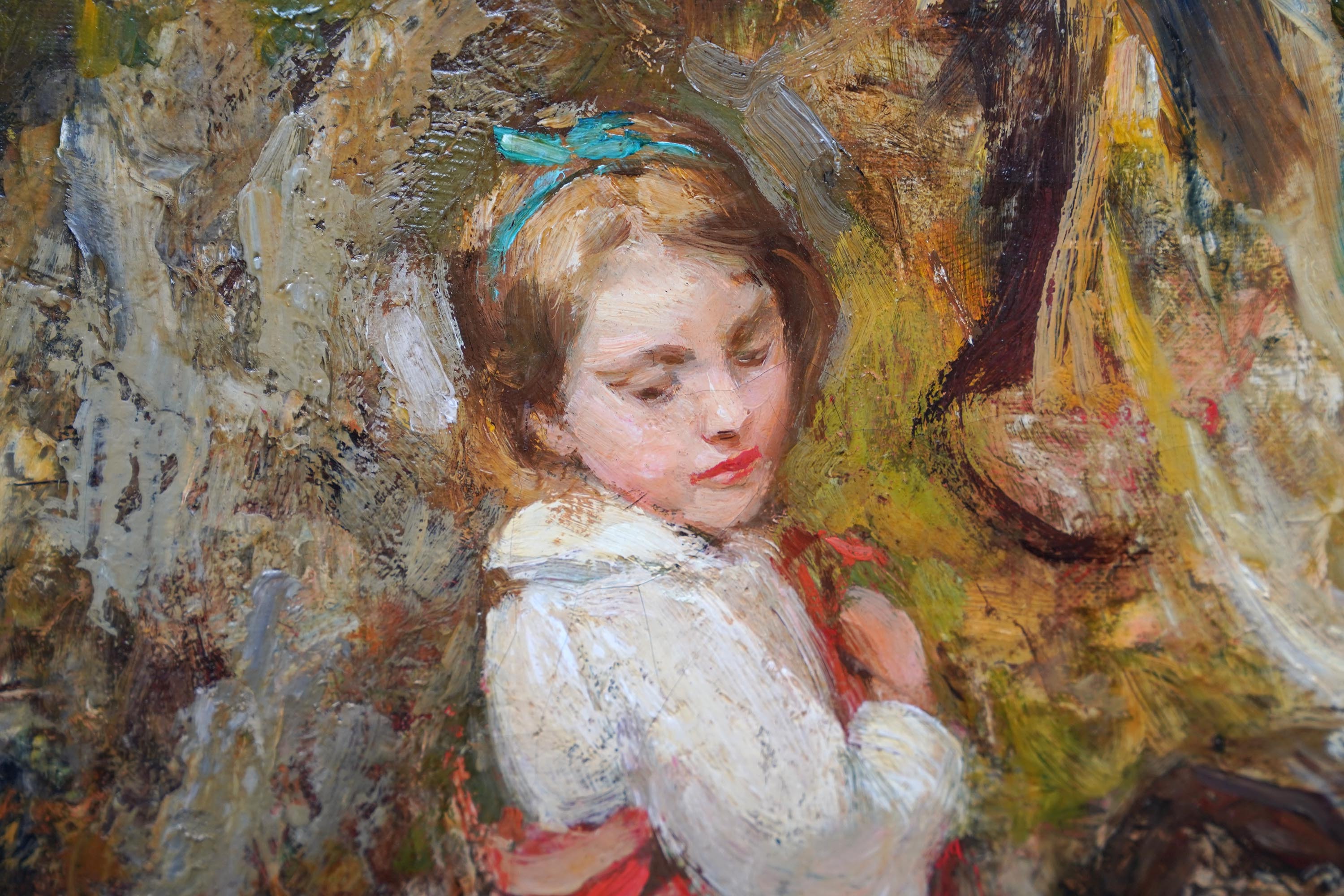
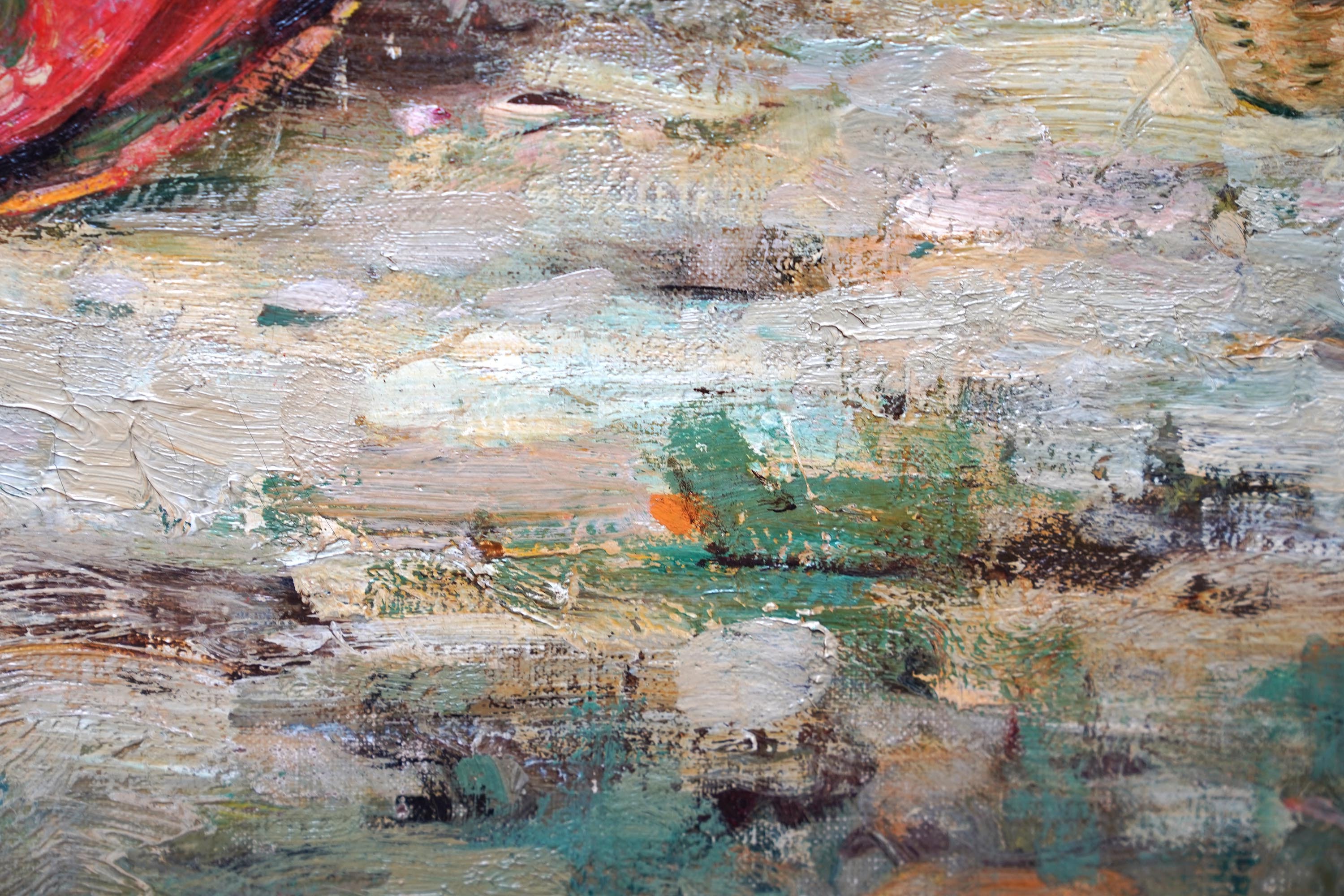
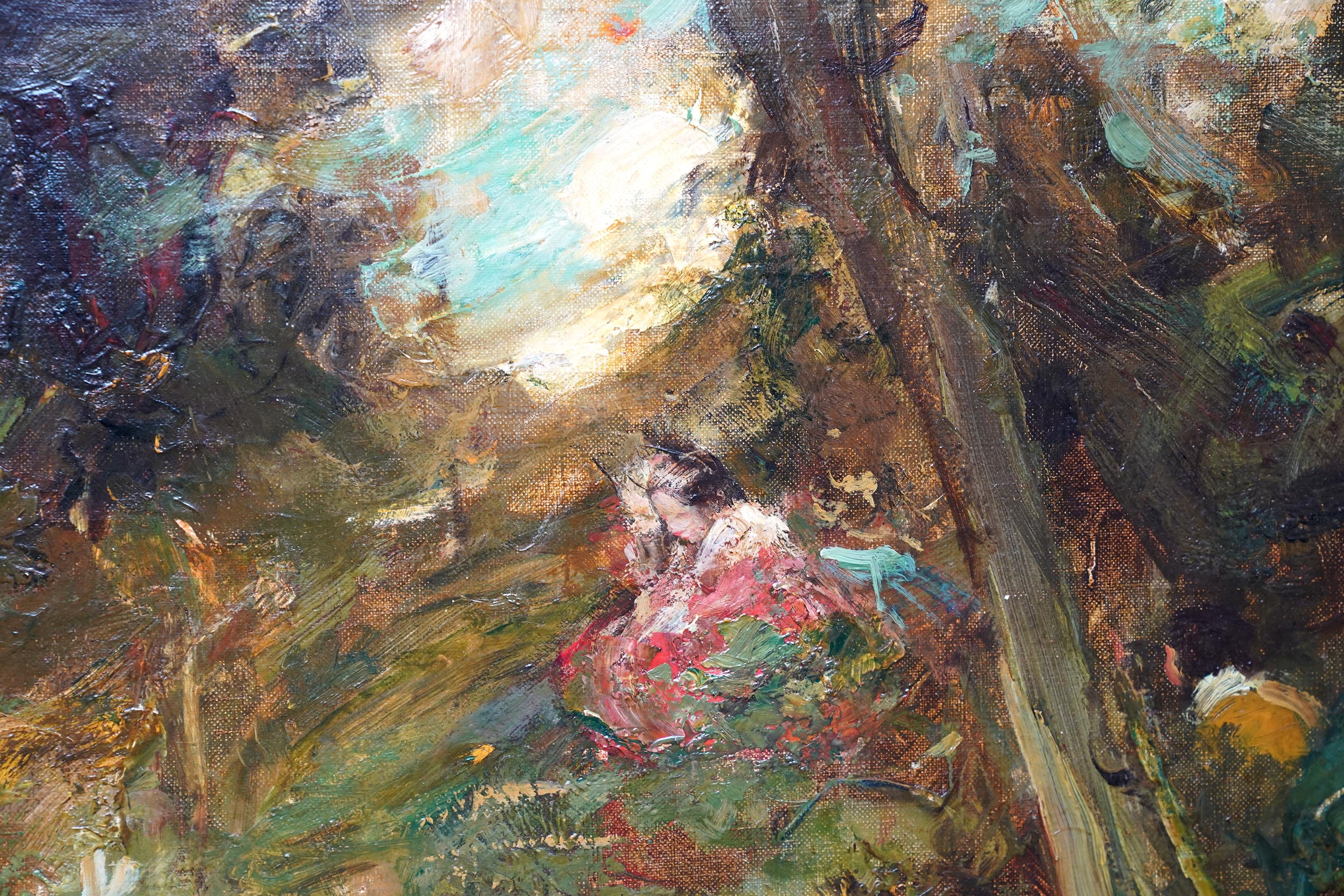
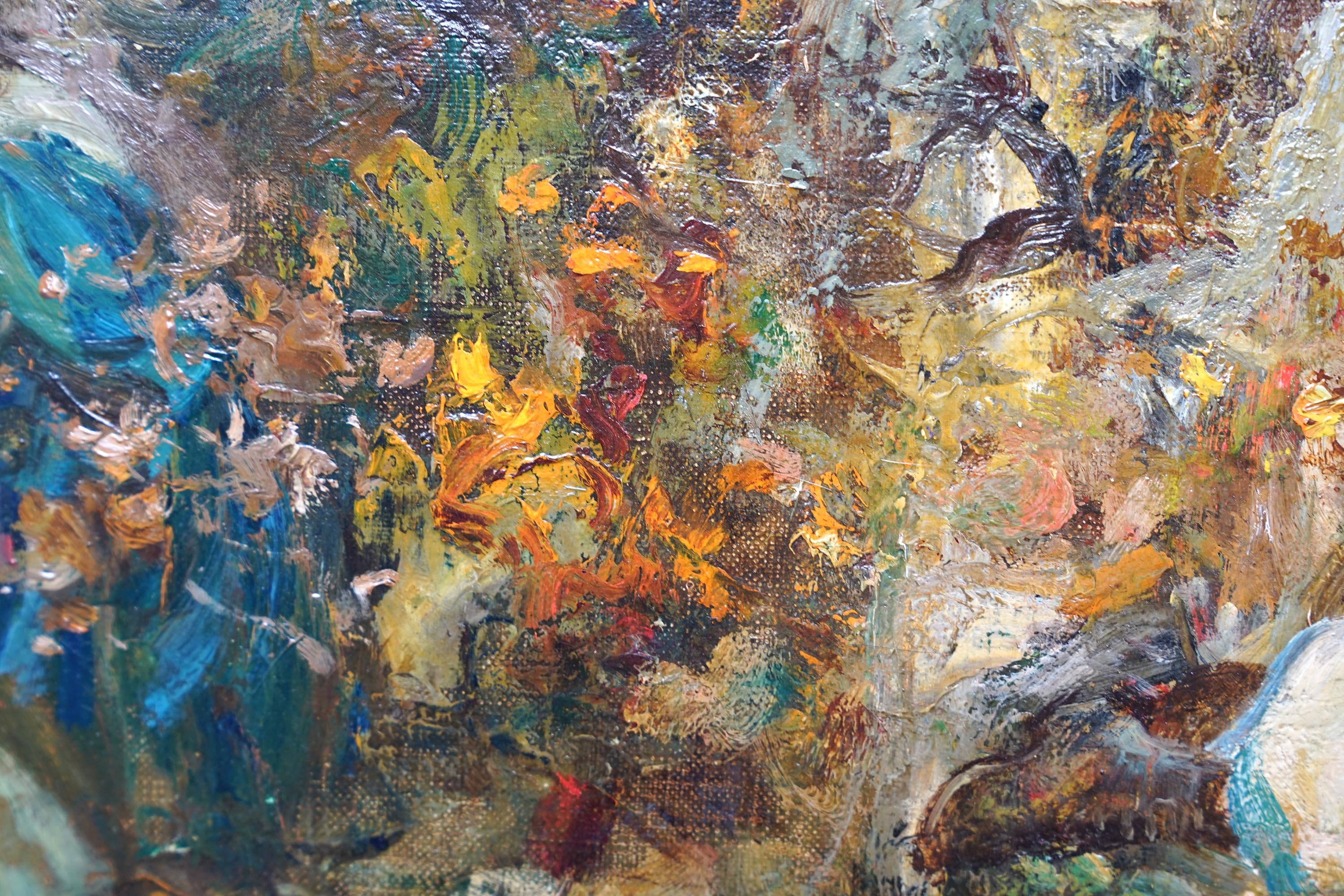
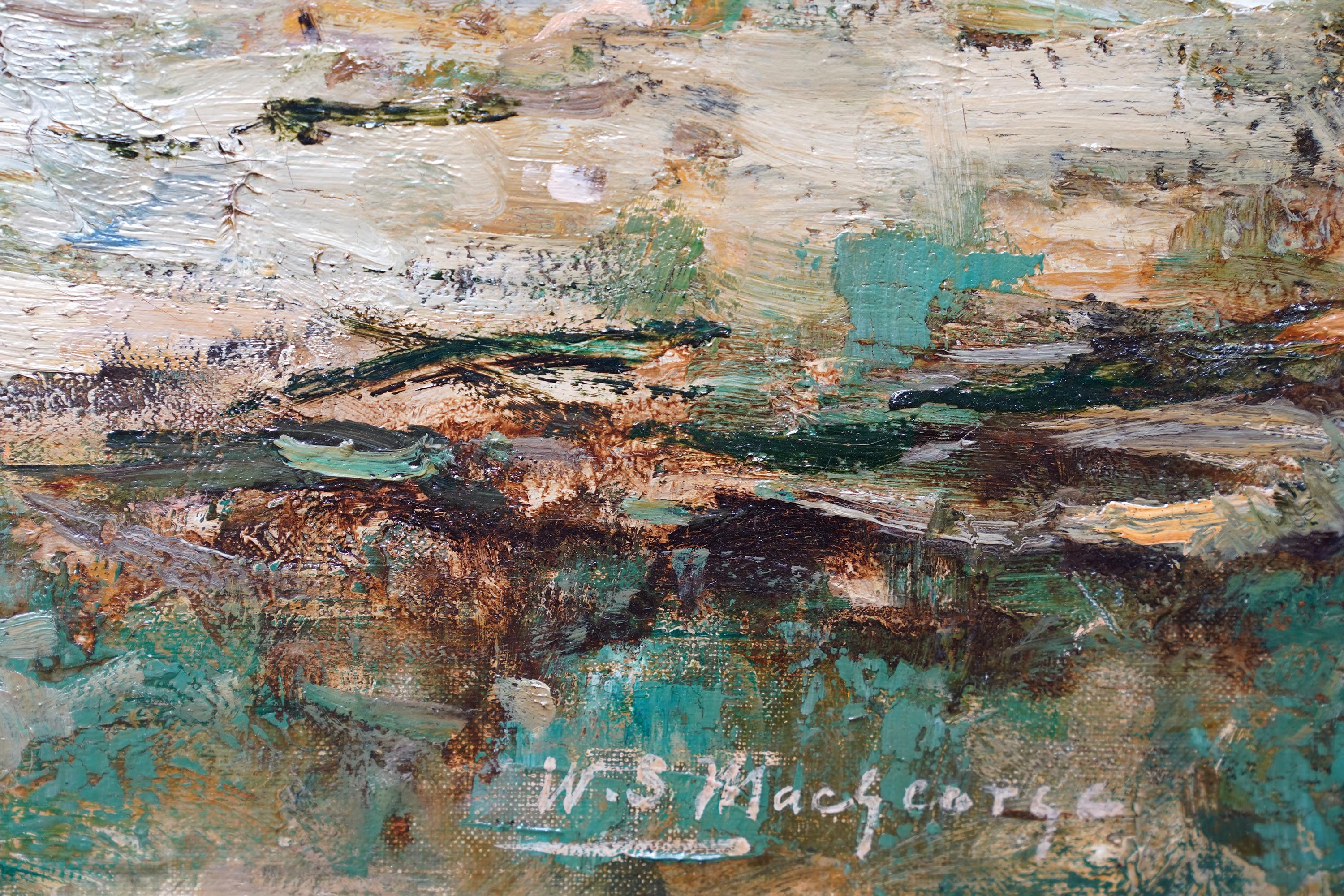
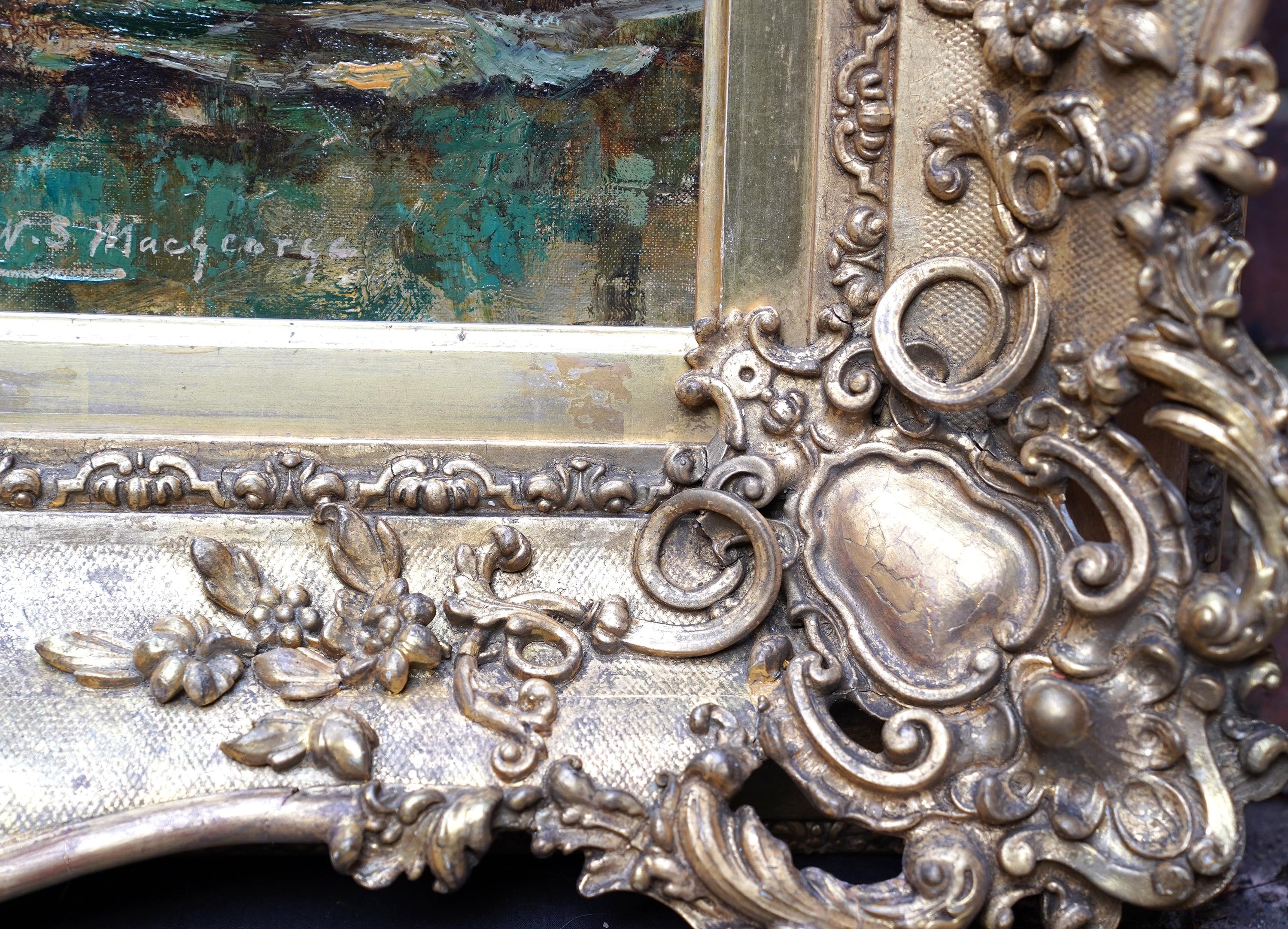
| Description | This superb Scottish Edwardian Impressionist exhibited figurative landscape oil painting is by noted artist William Steward MacGeorge. It was painted in 1901 and exhibited at the Royal Scottish Academy that year entitled My Lady's Train. The composition is a group of young girls beside a river under trees. Some are fishing, a couple are further up the path, two are tending a little fire, one blowing on it. The star of the show is standing in the foreground with a beautiful red patterned shawl wrapped around her, trailing the ground behind her - hence the title My Lady's Train. She's obviously putting on a little performance as she clasps the shawl to her chest and looks back over her shoulder and two of the girls are watching her and laughing. The red of her shawl is echoed both left and right in a friend's hat, the basket cloth and in flowers on the path, probably poppies. The other girl’s dresses are vivid pops of green, blue and yellow. The Scottish Impressionist brushwork and distinct MacGeorge style make this an absolute masterpiece and a first-class example of his work. Signed lower right. |
| Provenance | Exhibited at the Royal Scottish Academy 1901 no. 145 entitled My Lady's Train and illustrated on page 119 of catalog. Sotheby's August 2003 - sold for £28,000 + buyers premium. |
| Medium | Oil on Canvas |
| Size | 47 x 32 inches |
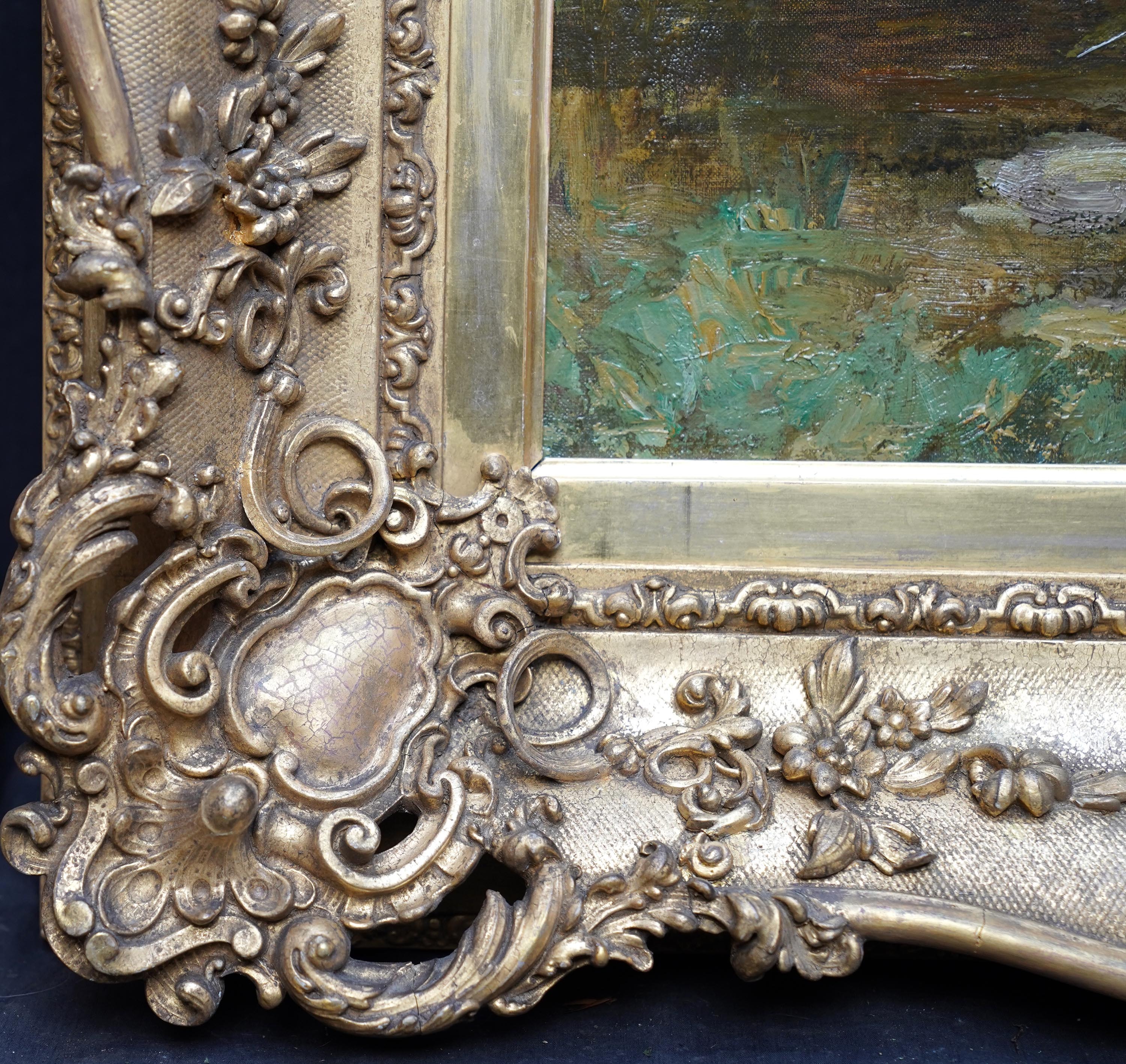
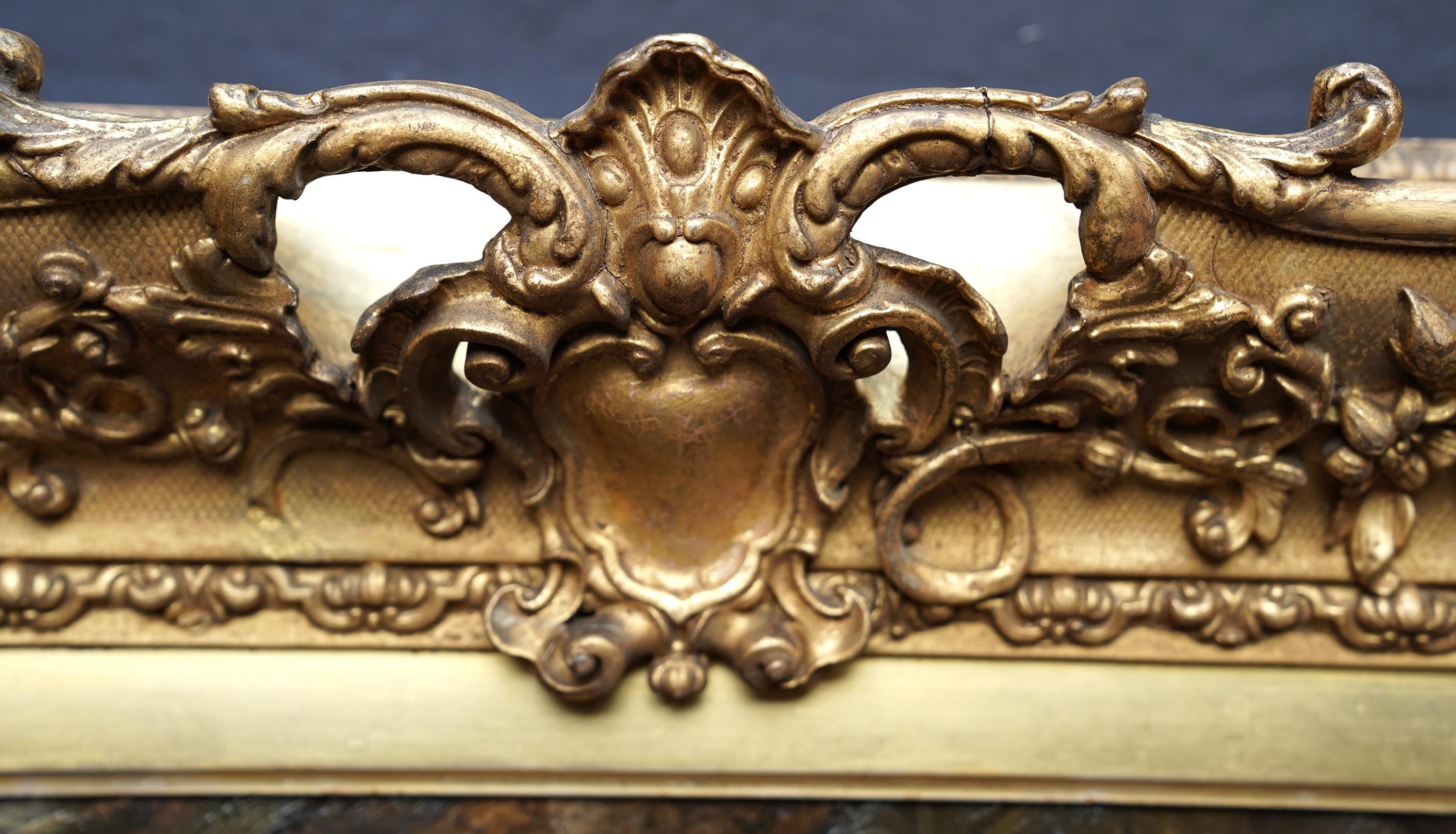
| Frame | Housed in an ornate gilt frame. Framed size is 54 inches by 39 inches and in good condition. |
| Condition | Good condition. |
| Biography | William Stewart MacGeorge (1861–1931) was a Scottish artist associated with the Kirkcudbright School. Born in Castle Douglas, lived at 120 King St. He attended the Royal Institution Art School in Edinburgh before studying under Charles Verlat in Antwerp 1884-85. On his return he painted subjects which involved children playing, executed in low tones. After becoming influenced by Edward Atkinson Hornel, who had also studied under Verlat, MacGeorge began using brighter colours and greater impasto. He continued to focus on the usual pastoral features so loved by Impressionists - children at play, fields of flowers, woods, rivers with fishermen, farm labourers, the effect of light and some evening scenes. MacGeorge was also inspired by the ballards of the Borders. Around 1912 he also spent some time painting in Venice. In 1929, two years before his death, MacGeorge married the widow of Hugh Munro, the watercolour artist Mabel Victoria MacGeorge and settling in Gifford in East Lothian where he died aged 70. His widow bequeathed about 45 of his paintings to Haddington Town Council. MacGeorge exhibited at the Paris Salons, winning a bronze medal at the Paris Exposition Universalle of 1900. He became a member of the Royal Scottish Academy in 1898 and an academician in 1910. He exhibited at the RSA (1881-1932), RGI (1883-1932) and RA (1894-1925). |
| Price | £30000 |