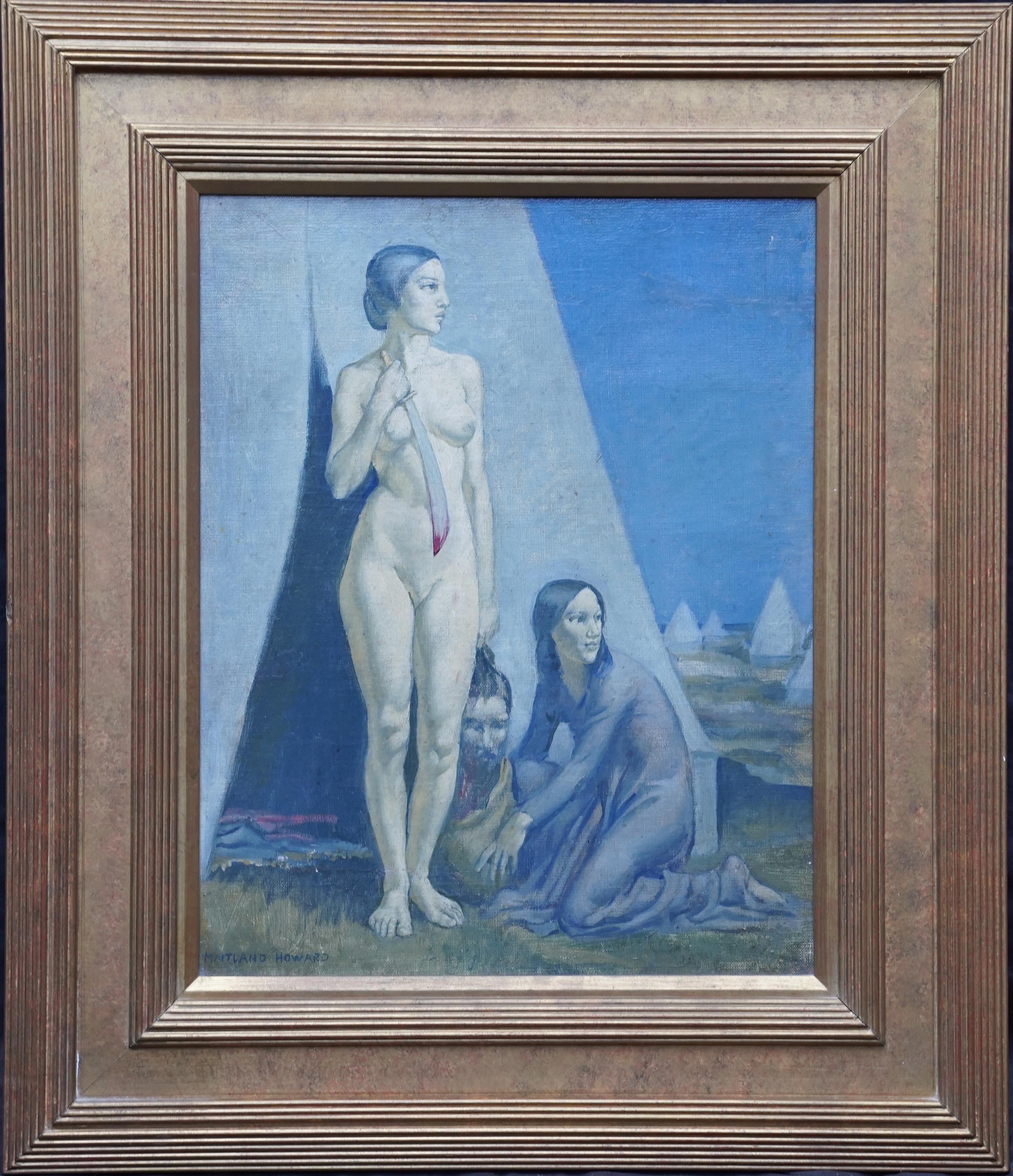
Margaret Maitland Howard (1898-1983)
| Artist Name | Margaret Maitland Howard (1898-1983) |
|---|---|
| Title | Judith |
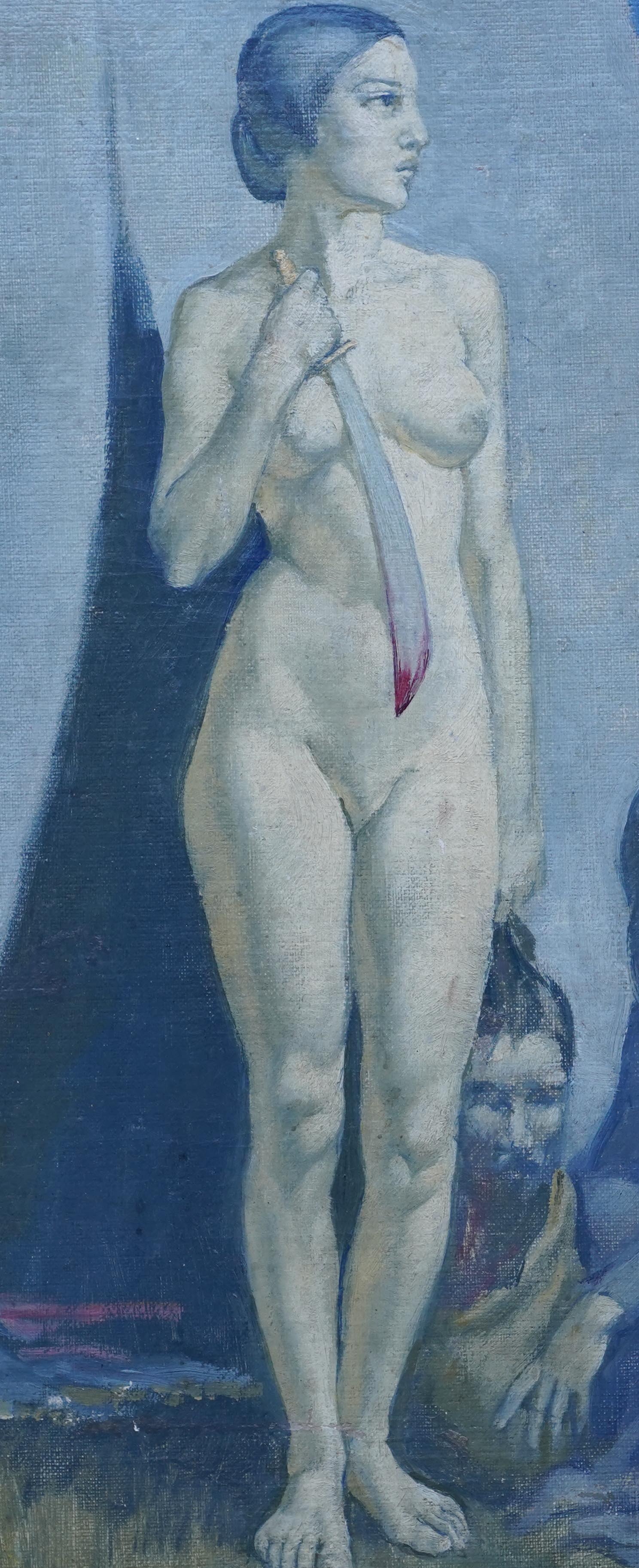
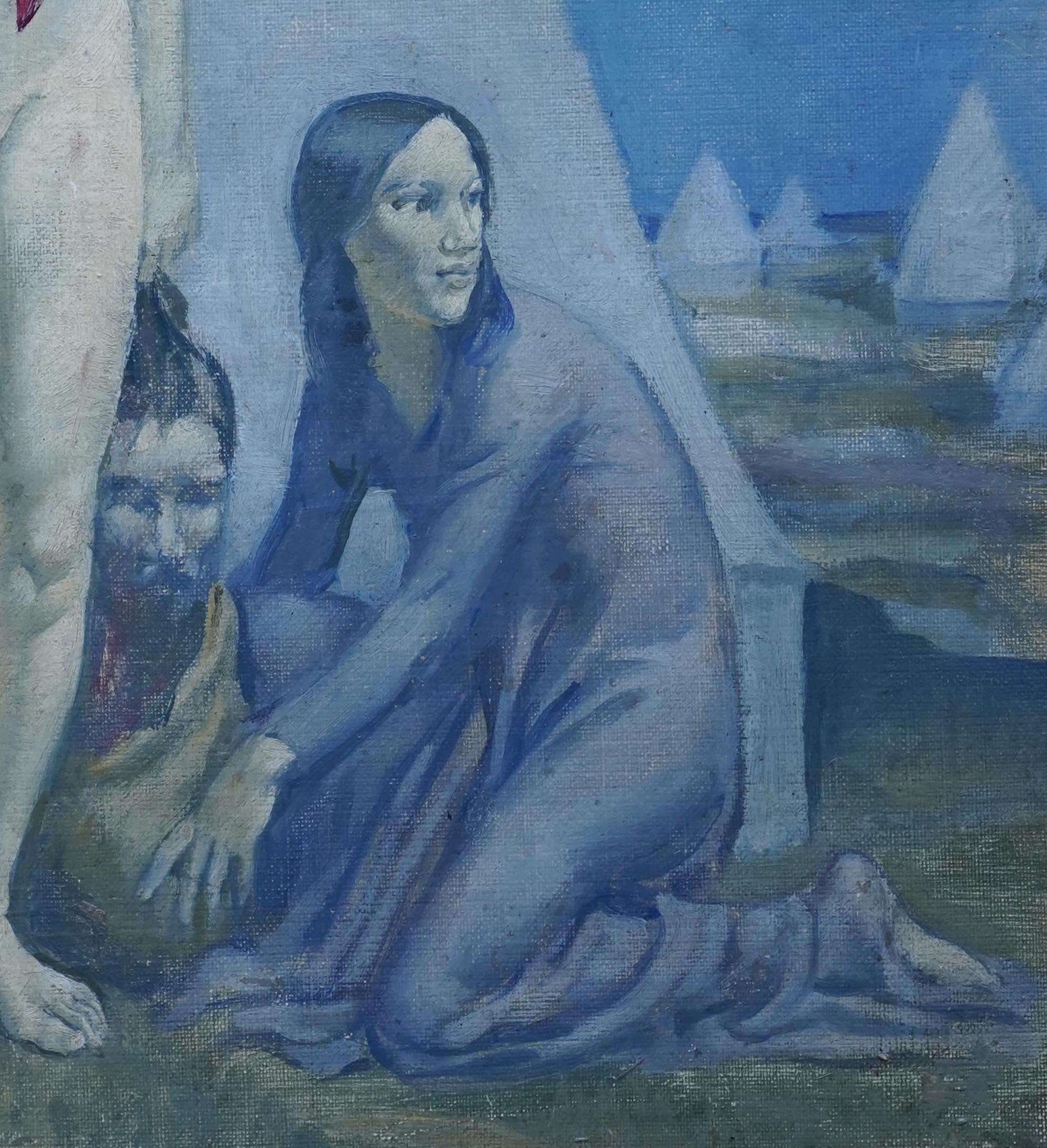
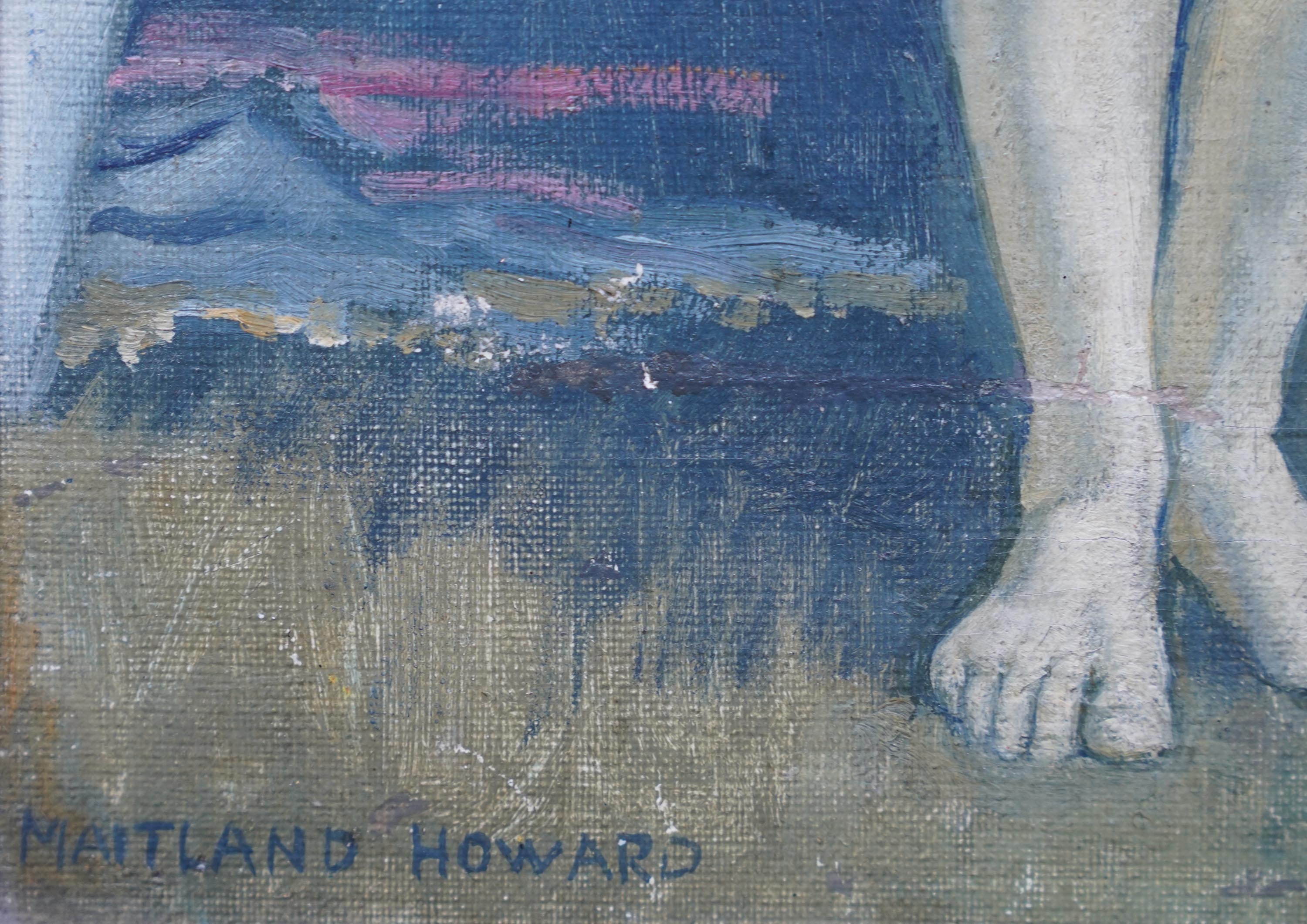
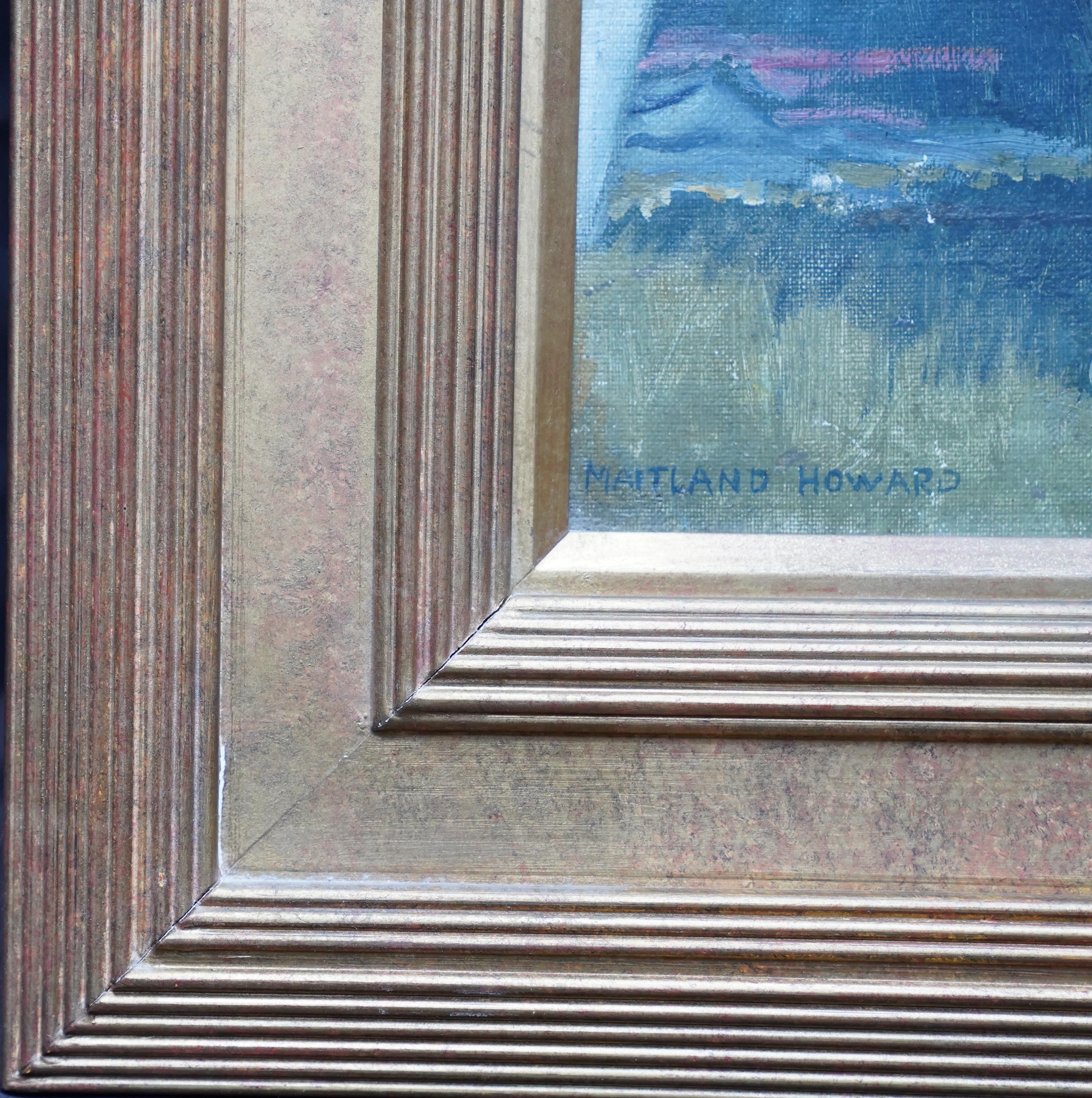
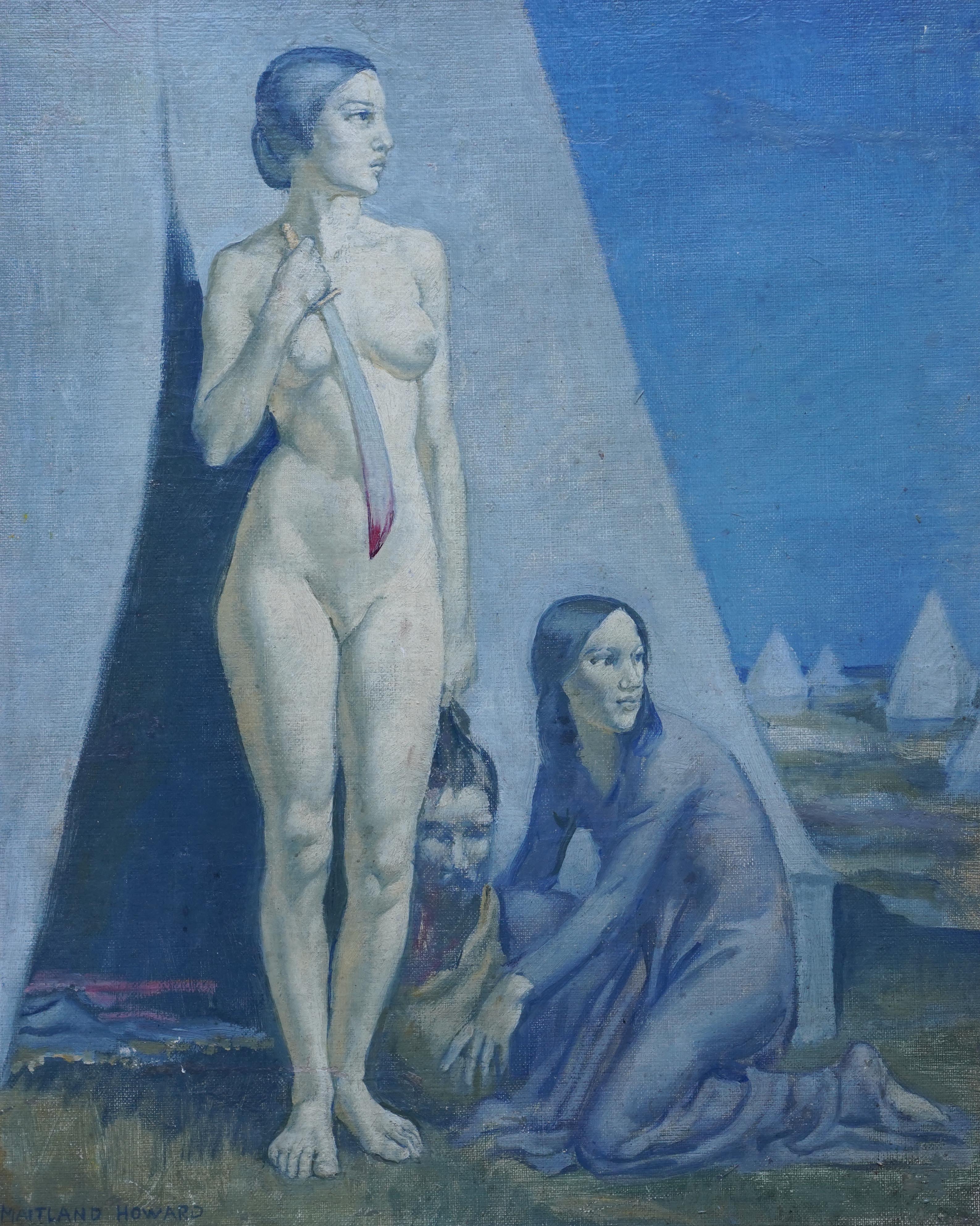
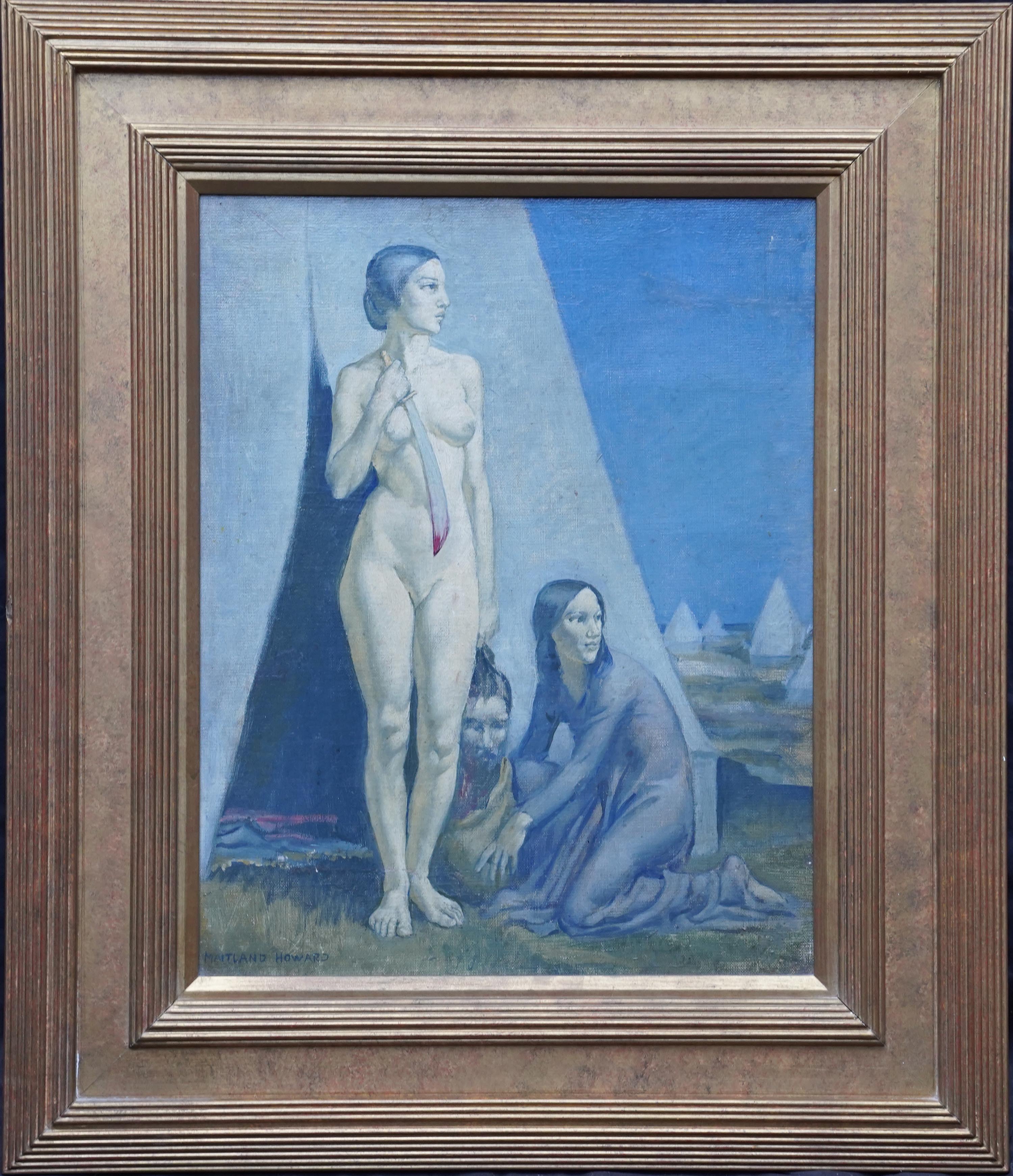
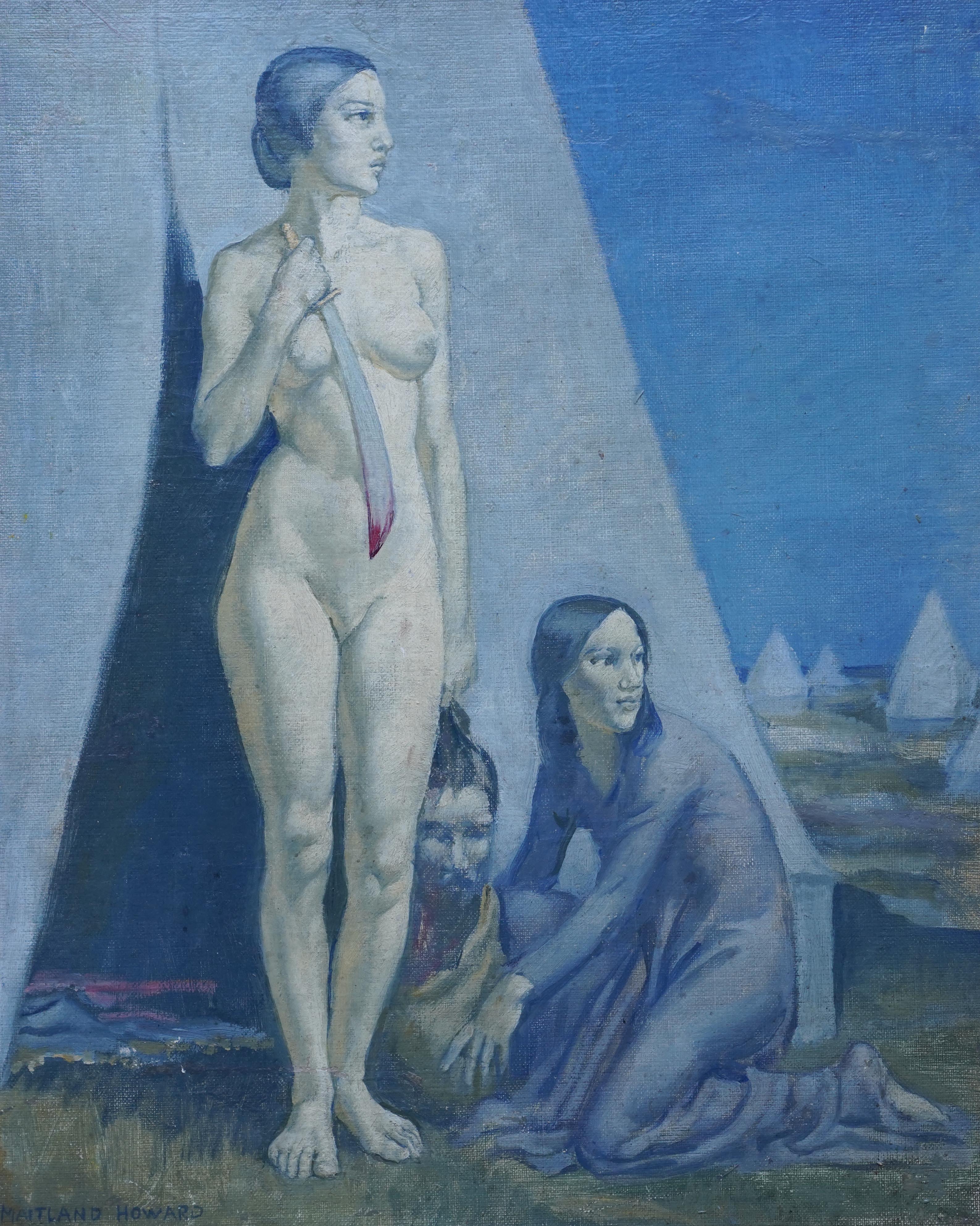
| Description | This absolutely fascinating British Post Impressionist figurative exhibited oil painting is by noted female artist Margret Maitland Howard. It was awarded first prize in the Summer Composition Prize at Slade School of Art in 1929 and exhibited in 1931 at the Royal Academy, London, simply entitled Judith. It is a full-length depiction of Judith, having just seduced and decapitated Holofernes, an invading Syrian General, in order to save her besieged city of Bethulia from his surrounding army. (The full story is below Howard's biography). She is aided by her maidservant, Abra. In the biblical story, this act is a significant moment in the narrative, symbolizing courage and empowerment of women in the face of great adversity. The story of Judith and Holofernes has been popular since the renaissance, depicted mostly by male artists. It's like a female version of David and Goliath. However, female artist Artemisia Gentileschi's (1630-1656) depictions of Judith slaying Holofernes have often been interpreted through a feminist lens due to her personal history as a rape survivor and her status as a woman in a male-dominated profession, both causing female rage. While her works share thematic and compositional elements with Caravaggio’s earlier rendition, Artemisia’s versions intensify the physical struggle and violence. Unlike Caravaggio, who portrays Judith as delicate and her maid as an elderly onlooker, Artemisia depicts both women as young, strong, and actively collaborating in the act. In this stunning Post Impressionist 1931 version everything is paired down into simple shapes and colours; the white tents against the blue sky, the bloody tip of the Holfernes own knife against Judith's pale skin. The emphasis is on Judith, not the struggle. The scene is post sex and murder and what she has just had to go through, (chastely celibate since her husband's death), emphasised by her nudity, as well as the murder she has carried out, in order to save her besieged city, when no one else could. Both women look to the far right, presumably at their city and the reason for their heroic act which led to Holofernes' army being defeated. This is a superb exhibited painting by a well sought after female artist depicting a biblical story of a supremely brave woman in a Post Impressionist 1920's style. Signed 'Maitland Howard' lower left |
| Provenance | Exhibited: Royal Academy, 1931, as 'Judith', no. 740 Caelt Gallery, London, mis-titled as 'Solomon's Head', where purchased by the previous owner in February 1993; Private Collection, UK . |
| Medium | Oil on Canvas |
| Size | 16 x 20 inches |
| Frame | Housed in a gilt frame. Framed size is 28 inches by 24 inches and in good condition. |
| Condition | Good condition. |
| Biography | Margaret Maitland Howard (1898 – 1983) was a painter, illustrator and draughtsman. Born in London, she studied at the Byam Shaw and Vicat Cole School of Art and Royal Academy Schools, where she was a multiple silver medal-winner. She exhibited at the RA, NEAC and SWA, amongst others. Though a 20th Century artist her best work has a romantic neo-classical style reminiscent of the Pre-Raphaelites and late Victorian classicists. |
| Price | £10000 |