Horses in Art - Online Exhibition
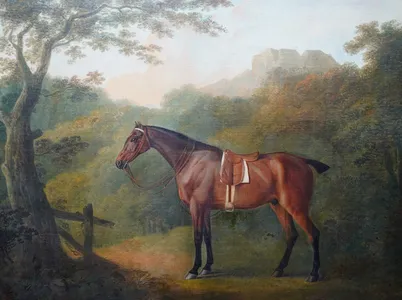
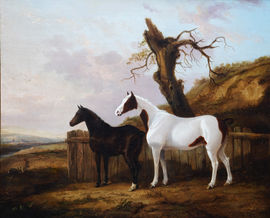
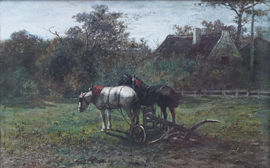
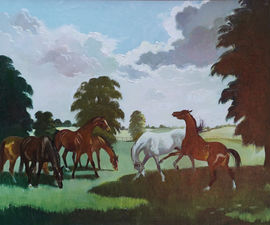
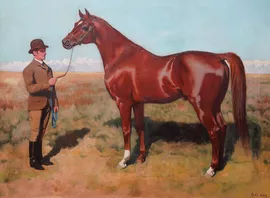
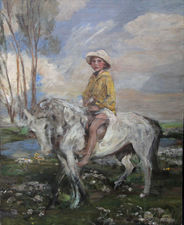
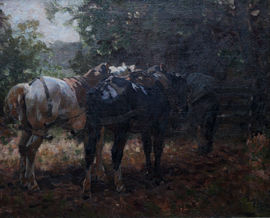
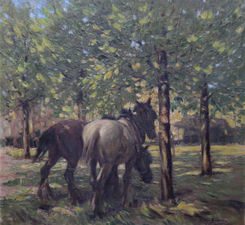
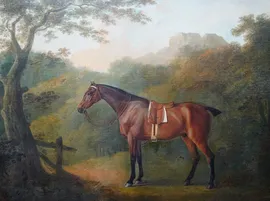
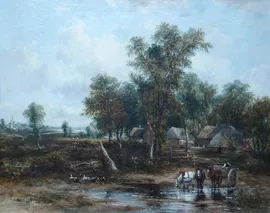
Below we have a collection of some of our favourite horse paintings by artists ranging from British artists such as Spooner and Boultbee to Dutch artist Vrolyk and female artist Zinkeisen. We have horses in landscapes, working horses, being ridden and even a race horse. We have only chosen paintings where the horse is the key feature, rather than incidental. If you like horses and art then you're in for a treat.
Since the dawn of time, the horse has held a special place in the collective imagination, not only as a noble and powerful animal, but also as a deep symbol in art and culture. Throughout the ages, it has been immortalized on canvases, in sculptures, and in legendary tales, playing a crucial role in the construction of myths and artistic expression.
In ancient civilizations, the horse was often seen as the means of transportation for the gods and heroes. Egyptian frescoes, for example, depicted horses in hunting and war scenes, representing divine power and freedom. In Greek mythology, horses were also omnipresent: the Trojan Horse, which symbolized cunning and strategy, remains one of the most powerful symbols in history.
Through medieval art, the image of the horse becomes more complex. It is the faithful companion of knights on their quests, and its place is central in scenes of epic battles. But it is in great epic tales, such as those of Roland or the knights of the Round Table, that it becomes the very embodiment of heroism and loyalty.
During the Renaissance, Italian and Flemish painters elevated the horse to the rank of protagonist, particularly in portraits of royal cavalrymen and battle scenes. One of the iconic works of this period is that of Leonardo da Vinci, who, in his sketchbooks, studied the musculature and posture of horses to better depict them in his paintings.
In the 19th century, with the Romantic movement, the horse became a symbol of wild freedom and untamed nature. Artists like Théodore Géricault, with his famous painting The Derby at Epsom, and George Stubbs, whose works on horses defined an era, captured the energy and raw beauty of the animal, elevating it to the rank of a mythological figure. These representations were often accompanied by a fascination with the relationship between man and beast, in a quest for power and freedom.
Today, the image of the horse continues to transcend time and inspire contemporary artists. Many modern and contemporary sculptors and painters, such as Robert Bateman and sculptor Manuel Martinez, continue to explore the symbolism of the horse, addressing themes such as freedom, the environment, and the relationship between man and nature.
The horse, in art and legends, is much more than just an animal. It embodies universal values, from power and freedom to loyalty and courage. Through the ages, it has inspired artists, myths, and popular tales, and continues to be an inexhaustible source of creation and reflection. Represented both as a sacred steed and as an unwavering companion of heroes, the horse remains a living symbol, as captivating and mysterious as it has always been in the history of art. Chevaux du Monde.
If you wish to provide a forever home for one of our horses then get in touch via info@richardtaylorfineart.com
Since the dawn of time, the horse has held a special place in the collective imagination, not only as a noble and powerful animal, but also as a deep symbol in art and culture. Throughout the ages, it has been immortalized on canvases, in sculptures, and in legendary tales, playing a crucial role in the construction of myths and artistic expression.
In ancient civilizations, the horse was often seen as the means of transportation for the gods and heroes. Egyptian frescoes, for example, depicted horses in hunting and war scenes, representing divine power and freedom. In Greek mythology, horses were also omnipresent: the Trojan Horse, which symbolized cunning and strategy, remains one of the most powerful symbols in history.
Through medieval art, the image of the horse becomes more complex. It is the faithful companion of knights on their quests, and its place is central in scenes of epic battles. But it is in great epic tales, such as those of Roland or the knights of the Round Table, that it becomes the very embodiment of heroism and loyalty.
During the Renaissance, Italian and Flemish painters elevated the horse to the rank of protagonist, particularly in portraits of royal cavalrymen and battle scenes. One of the iconic works of this period is that of Leonardo da Vinci, who, in his sketchbooks, studied the musculature and posture of horses to better depict them in his paintings.
In the 19th century, with the Romantic movement, the horse became a symbol of wild freedom and untamed nature. Artists like Théodore Géricault, with his famous painting The Derby at Epsom, and George Stubbs, whose works on horses defined an era, captured the energy and raw beauty of the animal, elevating it to the rank of a mythological figure. These representations were often accompanied by a fascination with the relationship between man and beast, in a quest for power and freedom.
Today, the image of the horse continues to transcend time and inspire contemporary artists. Many modern and contemporary sculptors and painters, such as Robert Bateman and sculptor Manuel Martinez, continue to explore the symbolism of the horse, addressing themes such as freedom, the environment, and the relationship between man and nature.
The horse, in art and legends, is much more than just an animal. It embodies universal values, from power and freedom to loyalty and courage. Through the ages, it has inspired artists, myths, and popular tales, and continues to be an inexhaustible source of creation and reflection. Represented both as a sacred steed and as an unwavering companion of heroes, the horse remains a living symbol, as captivating and mysterious as it has always been in the history of art. Chevaux du Monde.
If you wish to provide a forever home for one of our horses then get in touch via info@richardtaylorfineart.com