SELF PORTRAITS - ONLINE EXHIBITION

Self-portraits are iconic works where artists depict themselves, offering insight into their identity, style, and historical context. Self-portraits allow artists to explore identity, emotion, and social status. They serve as historical records, revealing personal and cultural contexts, and often push artistic boundaries. From Renaissance humanism to modern and contemporary experimentation, self-portraiture remains a central theme in art, bridging personal expression with universal human experience.
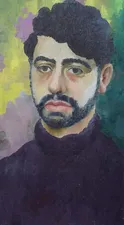
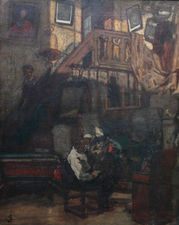
At Richard Taylor Fine Art we have a number of self portraits; of the artist alone, with their cat, in their studios and one rare family portrait of James Jebusa Shannon, the artist, with his wife and daughter. Why not grab a cuppa, have a browse and get in touch if anything catches your eye.
Famous Notable Self-Portraits and Artists
Albrecht Dürer – Self-Portrait at 28 (1500)
Dürer’s self-portrait is one of the most famous from the Northern Renaissance. He presents himself frontally, with a fur-trimmed robe and a hand gesture reminiscent of Christ’s blessing, symbolizing both his artistic skill and humanist ideals. The painting emphasizes symmetry, composure, and the artist’s elevated status in society, reflecting the Renaissance view of the artist as a creator endowed with divine talent
Vincent van Gogh – Self-Portrait with Bandaged Ear (1889)
Van Gogh painted this self-portrait after famously cutting off part of his ear. The work captures his emotional turmoil, with a solemn expression and dark background, while the Japanese print in the background reflects his admiration for Japanese art. It is a raw glimpse into his mental state and artistic resilience
Frida Kahlo – Self-Portrait with Thorn Necklace and Hummingbird (1940)
Kahlo’s self-portraits often depict her physical and emotional pain. In this work, she portrays herself with a thorn necklace and a hummingbird, symbolizing suffering and resilience. Her self-portraits frequently incorporate Mexican cultural elements, tropical flora, and fauna, emphasizing her identity and heritage.
Rembrandt – Self-Portrait (1660)
Rembrandt created over 90 self-portraits throughout his life, documenting his aging and artistic evolution. His 1660 self-portrait demonstrates mastery of light and texture, with a somber palette that conveys introspection and realism. These works are celebrated for their psychological depth and technical brilliance.
Leonardo da Vinci – Portrait of a Man in Red Chalk (c. 1512)
Believed to be a self-portrait, this red chalk drawing shows Leonardo in his later years. It highlights his meticulous draftsmanship and provides a rare glimpse into the appearance of the Renaissance polymath.